



What Skills Will Your Child Need in the Age of AI?

December 1, 2025
3 min read
A Gentle Guide for Parents
The world is changing faster than ever before. Artificial Intelligence (AI) is already reshaping our lives—from voice assistants and online recommendations to smart healthcare and self-driving cars. It’s natural for parents to wonder: What skills will my child need to grow up happy and confident in such a world?
Let’s take a warm and practical look at the key skills children will need in the age of AI, and how you can gently support them on this journey.
Understanding the Nature of the AI Era
AI will automate many repetitive and routine tasks, but it will also create new opportunities that need creativity, empathy, judgment, and lifelong learning. In the future, it won’t be enough just to “know technology”—children will need to be flexible, imaginative, and full of heart.
Six Essential Skills for the AI Future
1. Critical Thinking and Problem-Solving
AI can process huge amounts of information, but skills like “telling true from false,” “analyzing complex problems,” and “finding creative solutions” will always be human strengths. Children will need to ask questions, be skeptical, and seek evidence—not just passively accept information.
How you can help:
- Discuss news stories or real-life situations with your child. Ask what they think and why.
- When your child faces a problem, encourage them to brainstorm solutions before stepping in to help.
2. Creativity and Innovation
AI can imitate and generate content, but genuine creativity and breakthroughs still come from people. The future needs those who can think outside the box and connect ideas from different fields.
How you can help:
- Support your child’s creative activities: drawing, writing stories, building things, playing music or acting.
- Welcome wild ideas. Instead of dismissing them as “unrealistic,” explore together what could happen if their idea worked.
3. Digital Literacy and Information Evaluation
Knowing how to use technology safely and responsibly is essential. From basic programming and digital creation to evaluating online information for accuracy, these skills are becoming foundational.
How you can help:
- Set healthy screen-time boundaries and talk about online safety, privacy, and respect.
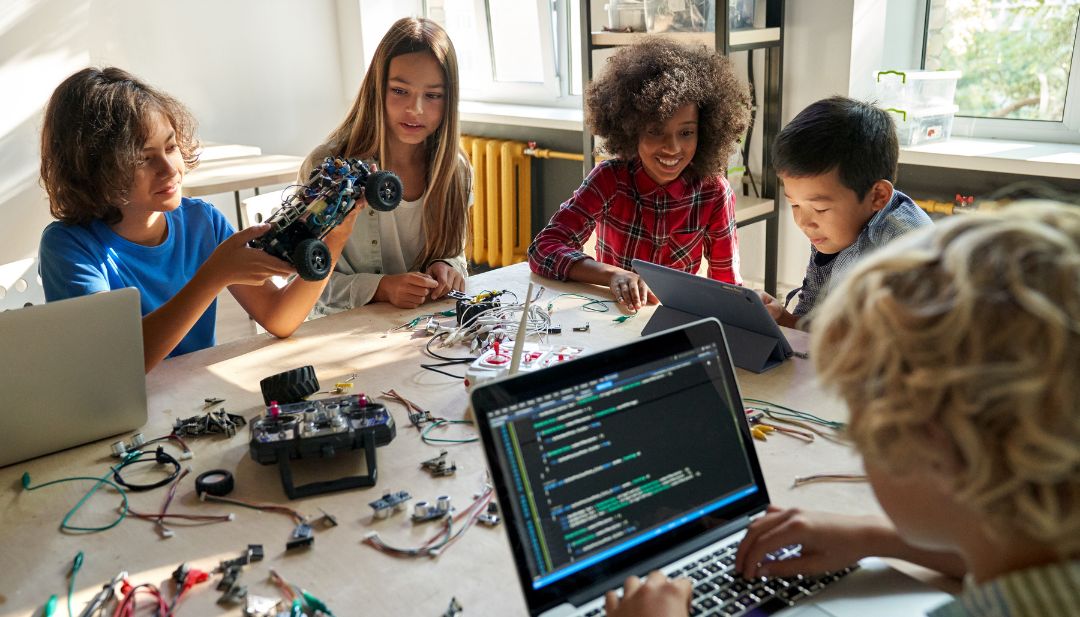
- Encourage your child to try age-appropriate coding games or classes to understand how technology works.
4. Collaboration and Communication
The future of work and life will be built on teamwork. Children who can communicate clearly, listen to others, and respect different viewpoints will have more opportunities.
How you can help:
- Encourage participation in team activities: clubs, sports, volunteering, or group projects.
- At home, listen to your child’s thoughts and feelings, and show them how to express themselves and listen to others.
5. Empathy and Ethical Thinking
AI is getting smarter, but only humans can truly care. Children who can understand others, respect differences, and make responsible choices will create stronger communities and trust.
How you can help:
- Talk about situations such as “Why is honesty important?” or “What can we do if we see someone being bullied online?”
- Get involved in community service or encourage your child to help others, building empathy through real experiences.
6. Self-Learning and Adaptability
The only constant in the future is change. Children need to learn how to learn, adapt to new situations, and see mistakes as opportunities to grow.
How you can help:
- When your child faces challenges, support them in finding resources and trying different approaches, rather than solving everything for them.
- Help your child set learning goals, reflect on progress, and see setbacks as a natural part of growth.
Your Role as a Parent: Companionship, Inspiration, and Confidence
In the AI era, what children need most isn’t a long list of technical skills, but the confidence to face a new world. You don’t need to teach your child everything; it matters more that you’re curious together, explore together, and grow together.
When your child is curious about AI, look up information, watch videos, or try experiments together. When your child feels frustrated, be there for their emotions and encourage them to try again. Trust in their potential—and remember, your love and support are their greatest foundation.
The future holds many unknowns, but one thing AI will never replace is the warmth, courage, and creativity of the human spirit. With love and understanding, we can help our children become their best selves in the AI era—ready to greet every new tomorrow with hope.