

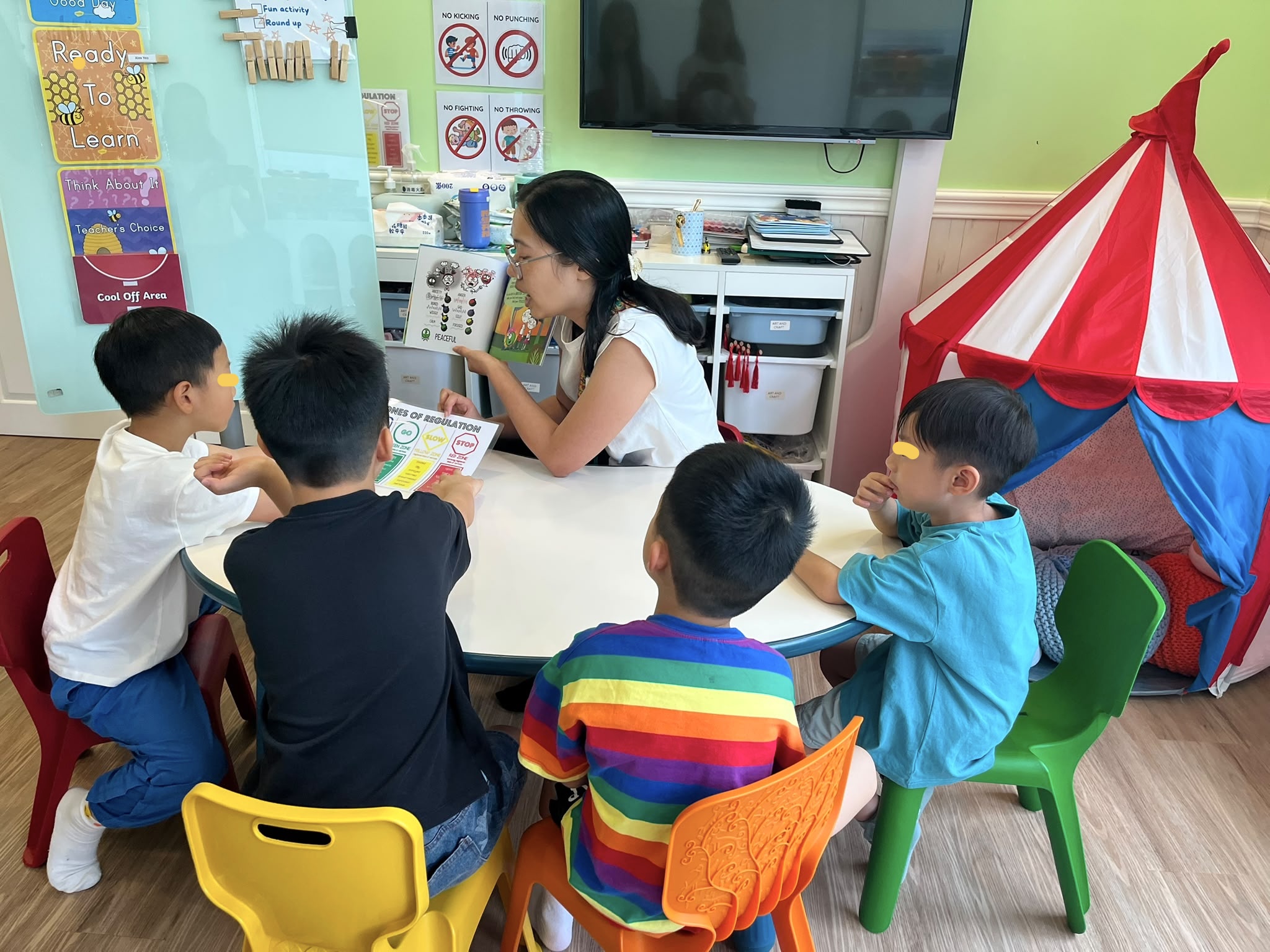

My Child Is Still Struggling at School in November. What Support Should We Ask For?

November 17, 2026
3 min read
It is November. The new school year no longer feels new, but your child still cries before school, avoids certain lessons or comes home exhausted. Perhaps the teacher says your child is quiet and cooperative, while at home you are seeing tears, anger or a growing reluctance to attend.
What should you actually ask for at the next parent–teacher meeting?
First, remember: home and school can see different children
Some children keep their worries inside until they reach home. Others find the busy classroom much harder than a quiet, familiar setting. Neither observation cancels out the other.
Five questions worth taking to the next school meeting
1. When is my child doing well? Ask about the lessons, people and situations in which your child participates comfortably. Strengths help the team plan support.
2. Where exactly does the difficulty appear? Is it during independent writing, group work, noisy transitions, unstructured playtime or morning separation? Specific examples are more helpful than “not coping.”
3. What happens just before and after? Does the child become overwhelmed by instructions, avoid a difficult task or need more time to process a change? Look for patterns rather than blame.
4. What have we already tried, and what happened? Ask about visual schedules, clear instructions, movement opportunities, check-ins, peer support or adjustments to written work. The right strategy depends on the reason for the difficulty.
5. What would progress look like over the next month? Agree on one or two observable goals, who will track them and when to meet again. For example: “Begins independent writing with one prompt” or “Joins a supported group activity twice a week.”
What can parents say without sounding confrontational?
A short message is often enough:
“I’d appreciate a chance to compare what we’re noticing at home and school. My child has been very upset before school and is exhausted afterwards. I know there may be things working well in class too. Could we discuss the situations that seem hardest, what has already helped and one or two steps to try together?”
What support might a school try first?
Depending on the child’s needs and school policies, a team might consider predictable routines, a visual timetable, instructions broken into manageable steps, a planned check-in, movement or sensory breaks, less copying, support for joining peers or targeted literacy help.
When can school observation be useful?
If parents and teachers cannot work out why a difficulty occurs, a structured school observation by an appropriately qualified professional may provide valuable context. It can examine the demands of particular lessons, transitions, peer interactions, sensory factors and the child’s response to existing support.
Does my child need a shadow teacher?
Not automatically. Some children benefit from ordinary classroom adjustments or targeted therapy. Others may need individualised in-school support for a defined purpose and period.
Before considering one-to-one support, ask: What specific barrier would the adult help the child overcome? How would progress be measured? And how would adult prompts be reduced as the child becomes more independent?
A diagnosis does not automatically mean full-time shadowing is necessary. Equally, a child can need temporary school support without a confirmed diagnosis. Decisions should reflect the child’s actual needs and the school’s procedures.
When is a psychoeducational assessment worth discussing?
Consider a professional consultation when the difficulty remains significant despite reasonable support, appears across learning, attention, emotional or social areas, or is difficult to explain from classroom observation alone.
A comprehensive psychoeducational assessment can help clarify strengths, possible learning or developmental differences, and practical recommendations for home and school. The purpose is to understand the whole child—not to force a label. Parents concerned about stigma or privacy should ask who receives the report and how findings may be discussed with school.
Leave the meeting with a simple plan
Agree on one or two goals, one or two strategies, one person coordinating communication, and a review date. Ask for a brief update after a few weeks. If the plan is not helping, that is useful information too; it tells the team what to reconsider.
If your child is still finding school very difficult, contact Sprout in Motion in Hong Kong via WhatsApp or the website enquiry form to discuss school observation, consultation, assessment or school support as appropriate.
Frequently asked questions
Should I wait until next term before asking for help?
Not if your child is experiencing persistent or substantial difficulty. A constructive school conversation can begin now.
Is a school observation the same as a psychoeducational assessment?
No. Observation helps explain what happens in context. A comprehensive assessment may bring together a wider range of information and measures.
Does every child with ADHD or autism need a shadow teacher?
No. Support is based on individual functional needs, not diagnosis alone.
Sources and service links
Sprout in Motion — School Support Services — https://sproutinmotion.com/school-support-services/
Sprout in Motion — School Observation — https://sproutinmotion.com/services/school-observation/
Sprout in Motion — School Shadowing — https://sproutinmotion.com/services/school-shadowing/
Sprout in Motion — Contact — https://sproutinmotion.com/get-in-touch/