




Helping Your Child Through Big Feelings: RSD, Frustration, Meltdowns, and Shutdowns

December 28, 2025
6 min read
If you’ve ever watched your child wilt at a small correction, crumble when a task gets hard, or spiral from “fine” to fury or silence in seconds—you’re not alone. Many parents tell me, “It feels like I’m walking on eggshells.” Teachers say, “I can see the talent in there, but feedback sets off a storm.” These moments are exhausting and scary, and they can make you question yourself. Let’s start here: your child isn’t broken, and you aren’t failing. What you’re seeing is a nervous system doing its best to protect them in a world that often feels too loud, too fast, and too judgmental.
This article is a gentle guide for those moments—especially for kids who are neurodivergent (ADHD, autism, learning differences). I’ll explain what’s happening, and then offer practical ways to make everyday life softer, steadier, and kinder for everyone.
What’s really going on when feelings feel “too big”
- Rejection Sensitive Dysphoria (RSD): Some kids feel criticism like a burn. A single comment—“Fix your heading”—turns into “I’m a failure.” It’s fast, intense, and real. RSD isn’t a formal diagnosis, but it describes a pattern we see often in ADHD: pain around rejection, criticism, and perceived failure. Research shows kids with ADHD are more sensitive to social evaluation and frustration, and their brains can fire up faster in those moments. You may see anger (“This is stupid!”), perfectionism, or a sudden retreat into tears. None of that is manipulation. It’s self-protection.
- Low frustration tolerance: Long directions, waiting their turn, the tablet freezing right before they beat the level—these aren’t small things to a brain that’s already working double-time to focus and plan. When the mental load is high (hungry, tired, overwhelmed), frustration boils over quicker. Studies link this to executive function—working memory, inhibition, and mental flexibility—and show that coaching skills can help.
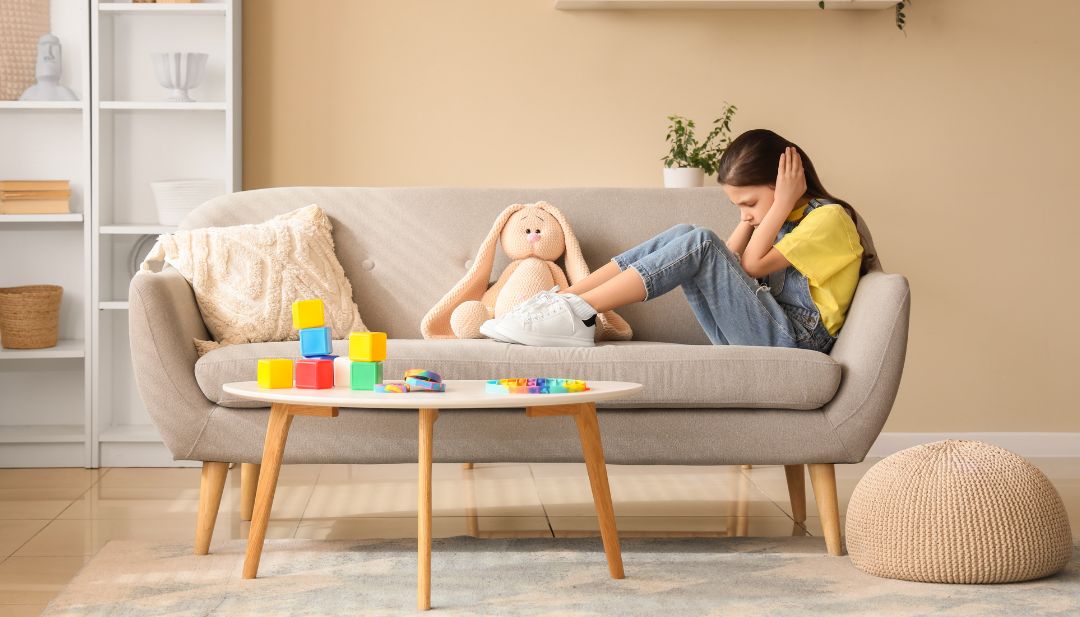
- Meltdowns and shutdowns: A meltdown is a body saying “I can’t”—with energy spilling out as yelling, crying, bolting, or hitting. A shutdown is the same “I can’t,” but in reverse: going quiet, head down, hiding, not responding. Both are involuntary stress responses. In those moments, language and reasoning drop; safety and calm have to come first.
A quick whisper from the research
You don’t have to wade through journals, but here’s the heart of what studies tell us:
- Emotional dysregulation is common in ADHD and autism; it’s tied to sensory overload, social stress, and executive function load.
- Kids with ADHD often react strongly to rejection or criticism; brain-imaging studies show heightened reactivity to social threat.
- Teaching concrete coping skills, adjusting environments, and co-regulating with a calm adult help. Behavioral parent training, CBT, and DBT-informed skills can reduce blowups and build resilience.
- Meltdowns and shutdowns aren’t willful misbehavior; they’re nervous-system storms. Your steady presence is medicine.
Day-to-day things that make life easier
Think of this as building a softer landing around your child. We lower the demands in smart ways, and we teach skills while their nervous system is calm and open to learning.
- Make the world more predictable and kinder
- Make expectations concrete: “Read for 10 minutes,” not “Read a chapter.” “Do problems 1–3,” not “Finish the page.”
- Use a simple visual plan: first-then (“First math, then snack”), a timer they can see, and a short “warm-up” before harder work.
- Offer private, gentle feedback: Pull in close, keep your voice warm, start with what worked. “I love your ideas. Let’s tweak the heading together.” Kids feel safer when the whole class doesn’t hear.
- Soften the senses: Noise-reducing headphones, a quieter spot, movement breaks, water bottles, gum or chew jewelry. Little things, big difference.
- Teach tiny skills in calm moments
- Name feelings without fear: “Looks like 7 out of 10 frustration.” A simple 0–10 scale helps kids talk about intensity.
- Body signals map: “Where does frustration live in your body?” Tight chest, hot face, buzzing hands—spotting early signs lets them act sooner.
- Pocket-sized coping menu: 5–7 tools they can actually use: box breathing, wall push-ups, squeeze a stress ball, cold water sip, mantra like “Feedback is information, not a verdict.”
- Practice receiving feedback: Role-play two-minute scenes. You pretend to be the teacher, then switch. Scripts help:
- “Oof, that stings. One part to fix is… I can do that.”
- “Thanks for the tip. I’ll change this piece first.”
- Build a frustration ladder: Start with tiny challenges they can almost do, then move up one step at a time with praise for sticking with it.
- Shift how we praise and motivate
- Praise the process: “You took two breaths and came back. That’s regulation.” “You tried one more step even when it was hard.”
- Reward recovery and asking for help: Points, stickers, or simply warm words for “I need a break,” “Can you sit with me?” or “I’ll try one more.”
- Allow do-overs: “Want a restart?” Shame shrinks; learning grows.
- Plan for the hot moments before they happen
- Agree on a signal and exit: A card, a hand sign, or “I need water.” Decide where they’ll go and how long.
- Two-minute pre-brief: “Math can be bumpy. If feedback feels sharp, what’s our plan?” Kids regulate better when they know there’s a way out.
- Quick post-brief (later, when calm): “What did your body tell you? What helped? What should we try next time?” Keep it short and blame-free.
What to do in the moment
When RSD or frustration is rising (the yellow zone)
- Be the calm in their storm: Lower your voice. Fewer words. A bit more space.
- Lead with validation: “That landed hard.” “Your brain is yelling danger. Let’s help it feel safe.”
- Offer one choice: “Two minutes in the quiet spot or a quick lap with me?” “Do you want me to read the comment, or you read and we fix one part?”
- Focus on one next step: “Let’s circle the one thing we’ll change.”
During a meltdown (the red zone)
- Safety first: Remove demands. Reduce noise, lights, audience. Clear nearby objects if needed.
- Co-regulate: “You’re safe. I’m here.” Breathe together. Use rhythmic cues more than words.
- Don’t teach mid-storm: Offer water, a weighted item, or space if that helps. Wait the wave.
- After the storm: Gentle re-entry. Snack, hydration, something low-demand. Later, a brief debrief and practice one preventive skill.
During a shutdown
- Gentle presence: Sit nearby, side-by-side. Avoid rapid-fire questions.
- Offer low-demand choices: Thumbs up/down, nods, visual cards. “Lights dim? Quiet corner?”
- Start tiny: “Write one word,” “Place one block,” “Tap the answer.” Praise the step, then pause.
School tweaks that help
- Accommodations to ask for: access to a calm-down space; movement breaks; visual checklists and rubrics; private feedback; chunked assignments with breaks; extended time in segments.
- Classroom routines: two-minute transition warnings with a visual timer; “help after attempt” (try for 1–2 minutes, then get help); feedback that starts with two strengths and one specific tweak; quick emotion check-ins with a “tools box” kids can use.
Home rhythms that protect
- Predictable routines, flexible exits: Break cards are not “getting away with it”—they’re tools to stay in it.
- Daily 5–10 minutes of “special time”: No corrections, no directives—just following their lead. This buffers against RSD and builds connection.
- Family scripts: “Brains learn from tries.” “Feedback grows pathways.”
- Foundations: sleep, food, water, movement. Every hour your child is under-slept or under-fueled makes regulation harder. Meeting basic needs cuts blowups dramatically.
How to think about “discipline” in these moments
You can’t punish a nervous system into calm. Consequences don’t teach a dysregulated brain; safety and practice do. Accountability still matters—repair, re-do, make amends—but it happens after regulation, and it’s paired with coaching: “How can we fix what happened, and what’s our plan for next time?”
When it’s time to get extra help
Reach out if big reactions are frequent, last a long time, involve self-harm or aggression, or keep your child from school or friends. Ask about:
- Behavioral parent training or teacher consultation (to fine-tune routines and reinforcement)
- CBT tailored for ADHD/autism (to build coping and reframe thoughts)
- DBT-informed skills (distress tolerance and emotion regulation)
- Occupational therapy for sensory needs
- A medical review of sleep, ADHD, anxiety, or mood treatments
For those who want the research trail
- Emotional dysregulation is common in ADHD and autism and tied to higher irritability and difficulty down-regulating arousal (Shaw et al., 2014; Conner et al., 2021).
- Kids with ADHD show stronger responses to social threat and frustration and are more sensitive to peer rejection (Mikami, 2010; Kowal et al., 2015; Seymour et al., 2012).
- Skills-based interventions—behavioral parent training, CBT, and DBT-informed modules—help reduce outbursts and improve coping (Chronis-Tuscano et al., 2016; Jensen et al., 2017; Wood et al., 2009; Reaven et al., 2012).
- Meltdowns/shutdowns follow nervous-system patterns; co-regulation and environmental supports reduce intensity (Mazefsky & White, 2014; Porges, 2011).
A note on getting support
If you’re seeing these patterns and want a steady, skilled partner, reach out to our Sprout in Motion child experts. They can help you create a personalized plan for home and school, coach you through tricky moments, and coordinate with teachers so your child feels safer, more understood, and more successful day to day. You don’t have to do this alone.