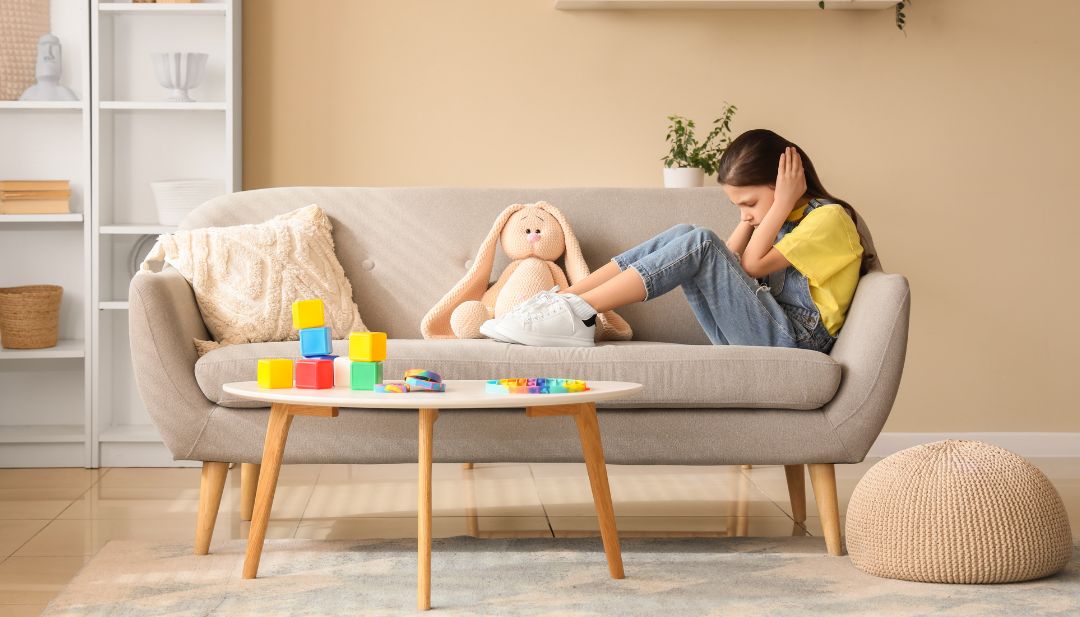





Seeing What’s Hard to See: A Parent-Friendly Guide to Early Signs of ADHD by Age, and How It Can Look Different in Girls

January 3, 2026
5 min read
If you’ve ever wondered, “Is this just my child’s personality—or something more?” you’re in good company. Many parents come to me with a mix of worry and love. They see a bright, funny, big-hearted child who also loses shoes like magic tricks, melts down over small things, or can’t seem to finish anything they start. Let’s gently sort what’s typical from what might be ADHD, so you can support your child sooner and with more confidence.
First, a deep breath: ADHD is common, highly heritable, and treatable. Kids with ADHD are not lazy or defiant; their brains are wired for novelty and movement, and sometimes need extra scaffolding to do what school and daily life demand. Early understanding can be a relief—it gives you language, strategies, and options.
What ADHD is (in plain language)
- ADHD affects attention, impulse control, and activity level. It can show up as hyperactive/impulsive, inattentive, or combined presentation.
- It’s a difference in brain development and self-regulation. Motivation systems favor “interesting now” over “boring later,” which explains why your child can hyper-focus on Lego for hours yet can’t get through a worksheet.
- Many kids have co-occurring challenges like anxiety, learning differences, or sleep difficulties.
Preschool (ages 3–5): When is “busy” more than busy?
Preschoolers are naturally active and distractible. We start to wonder about ADHD when behaviors are frequent, intense, and happening across settings (home, daycare, playground), compared with peers the same age.
Possible signs:
- Constant motion that’s hard to redirect; climbing, jumping, running off, even when others are seated
- Difficulty waiting turns, frequent interrupting, impulsive grabbing or hitting in excitement
- Very short play focus (shifts every 1–2 minutes) unless the activity is highly preferred
- Big reactions to small frustrations; quick to tears or anger, then quickly onto the next thing
- Struggles with multi-step directions (“First shoes, then jacket”) even after lots of practice
- “Fearless” with safety—bolting into the parking lot, no sense of danger
What helps now:
- Simple routines with visuals and songs for transitions
- Clear, brief instructions: one step at a time
- Movement breaks every 5–10 minutes; jobs that let them carry, push, or stretch
- Positive attention for the behaviors you want more of; gentle, consistent limits for safety
Elementary school (ages 6–11): Where the gap often widens
School raises the bar on sitting still, organizing materials, and finishing work without constant reminders. Kids with ADHD may look bright and verbal but fall apart on the “doing” part.
Possible signs:
- Homework drama: forgotten materials, “I don’t know what to do,” lost assignments, unfinished classwork
- Distractibility: looks around the room, talks to peers, off-task unless the work is hands-on or exciting
- Messy desk/backpack; difficulty starting tasks; needs many prompts to re-engage
- Rushing through work with careless mistakes, or “staring and stuck” and not getting started at all
- Emotional dysregulation: big reactions to correction or losing a game; difficulty bouncing back
- Social bumps: blurting, interrupting, trouble with personal space, or seeming “immature” compared to classmates
What helps now:
- Externalize the plan: checklists, visual schedules, and examples of finished work
- Chunk tasks into short “missions” (5–15 minutes), with brief movement or water breaks between
- Teach organization explicitly: one-folder system, color-coding, backpack clean-out rituals
- Praise effort and strategies; use gentle prompts: “What’s your first small step?”
- Consider school supports: preferential seating, movement passes, reduced copying, chunked assignments
Adolescence (ages 12–18): The invisible workload explodes
Middle and high school demand self-management: planning, prioritizing, remembering, resisting distractions. ADHD can show up as missed deadlines, emotional burnout, or risky choices—especially when sleep is short and screens are long.
Possible signs:
- Time blindness: underestimates how long things take; procrastinates until the last minute
- Inconsistent performance: aces what they love, tanks what bores them
- Losing track of multi-step projects; poor note-taking; forgetting to submit finished work
- Emotional swings: stress, irritability, shame after mistakes; school avoidance brewing
- Increased risk behaviors for some teens: speeding, vaping, impulsive choices, especially with peers
- Sleep problems: staying up late, hard mornings, napping after school
What helps now:
- Scaffold executive functions: weekly planning sessions, calendars with alerts, “body-doubling” (working alongside someone)
- Break projects into dated micro-steps; teach realistic time estimates
- Protect sleep; set phone charging outside the bedroom; anchor routines to existing habits
- Explore evidence-based treatments: ADHD coaching, CBT for executive skills, and medication when appropriate
- Teach self-advocacy: how to email a teacher, ask for help, and use accommodations
Girls and inattentive presentation: Why it’s often missed
Many girls (and some boys) have primarily inattentive ADHD. They may not be disruptive—so they fly under the radar. Their strengths in masking and people-pleasing can hide real struggles.
How inattentive ADHD can look:
- Quiet daydreamer; “in her head,” misses instructions, slow to start work
- Neat handwriting sometimes, but incomplete work; perfectionism that leads to avoidance
- Works hard to compensate; exhaustion or tears after school; “good at school, melting at home”
- Anxiety and low self-esteem: “I’m trying so hard; why can’t I keep up?”
- Socially, may be sensitive to rejection, overthink interactions, and mask to fit in
Why it matters:
- Later identification can mean years of unnecessary shame, anxiety, and under-support.
- Research suggests girls are diagnosed later than boys and are more likely to present with inattentive symptoms and internalizing problems (Gershon, 2002; Ramtekkar et al., 2010). Early support protects mental health and academic pathways.
What to do if you’re seeing yourself or your child here
- Start with observation. Jot specific examples across settings for 1–2 weeks: what happened, when, how often, what helped.
- Talk to your child’s teacher(s). Ask what they see compared with classmates the same age. Share your notes kindly and concretely.
- Ask a clinical child psychologist about an ADHD evaluation. This often includes parent/teacher rating scales (e.g., Vanderbilt, Conners), developmental history, classroom observations, and sometimes psychoeducational testing to check for learning differences. Clinical child psychologists can also coordinate with your school team and recommend supports.
- Rule-ins and rule-outs. Sleep, vision/hearing, anxiety, depression, and trauma can mimic or magnify ADHD symptoms; a good evaluation looks at the whole picture.
- Consider a trial of supports now. You don’t need to wait for a diagnosis to use routines, visuals, movement breaks, and positive reinforcement.
What works: evidence-based supports
- Behavioral parent training and classroom consultation improve behavior and parent confidence, especially in the early years.
- School accommodations (IEP/504) can level the playing field: chunked work, movement breaks, reduced copying, extended time, and access to notes.
- Skills-based therapies help with emotion regulation and executive functions (CBT, DBT-informed modules).
- Medications (stimulants and non-stimulants) are well-studied and often effective; careful titration and monitoring matter.
- For girls/inattentive presentation: add supports for anxiety, self-esteem, and perfectionism; normalize help-seeking and boundary-setting.
Simple scripts you can use
- “Your brain loves interesting and fast. Let’s build the plan to help with the slow parts.”
- “We’ll make the steps small and the wins visible.”
- “Needing reminders doesn’t mean you’re not trying. It means your brain needs a different kind of support.”
- “You are not your struggles. We’ll use your strengths to carry the hard parts.”
A checklist by age
Preschool
- Frequent, intense, cross-setting hyperactivity/impulsivity
- Safety risks from bolting/climbing
- Very short attention unless very interested
- Big feelings, fast shifts
Elementary
- Loses/forgets materials, stuck or rushed work
- Needs many prompts to start or finish
- Emotionally reactive to correction
- Social blurting/interrupting or seeming “immature”
Adolescence
- Chronic lateness, missed deadlines, uneven grades
- Project planning falls apart; time blindness
- Heightened stress, irritability, or avoidance
- Sleep problems; risky impulsive choices for some
Girls/inattentive clues at any age
- Quiet, daydreamy, slow to start; misses details
- Under the radar at school, big emotions at home
- High effort with low output; perfectionism
- Anxiety, self-doubt, people-pleasing
A word about strengths
Kids with ADHD are often creative problem-solvers, energetic collaborators, and big-idea thinkers. They feel deeply and can be intensely loyal and funny. The goal is not to change who they are—it’s to build supports around the friction points so their strengths have room to shine.
Research in brief
- ADHD is associated with differences in neural networks for attention and reward; interest and immediate feedback improve performance (Sonuga-Barke, 2005; Patros et al., 2019).
- Early behavioral interventions and school accommodations improve outcomes; stimulant and non-stimulant medications are effective for many children (AAP Clinical Practice Guideline, 2019).
- Girls are more likely to present with inattentive symptoms and internalizing problems, contributing to later diagnosis (Gershon, 2002; Ramtekkar et al., 2010).
You’re not alone—and you don’t have to become an expert overnight. If you’d like a thoughtful partner to help you sort next steps, reach out to our Sprout in Motion child experts. Together, we can turn “What’s wrong?” into “Here’s what helps,” and build a plan that fits your child, your family, and your values.